
Happy Valley's Deck Experts & Premium Deck Builders in Happy Valley, Oregon
Transform your outdoor living space with Happy Valley’s most trusted deck builders. Deck Masters creates beautiful, durable decks that fit your home, your lifestyle, and Oregon’s unique climate.
About Deck Masters in Happy Valley
Deck Masters has been building exceptional decks, fences, patio covers, and outdoor living spaces throughout Happy Valley since 2008. As a locally owned and operated company, we specialize in high-end craftsmanship and long-lasting designs that complement the Pacific Northwest lifestyle.
Our team has decades of experience constructing custom decks using materials built to withstand Happy Valley’s rain and temperature swings. We’re proud to be a certified TrexPRO Platinum contractor — one of the highest levels of recognition for Trex composite deck installation.
We serve homeowners across the entire Portland metro area, including Beaverton, Hillsboro, Gresham, Lake Oswego, West Linn, Tigard, Happy Valley, Camas, and Vancouver, WA.
Happy Valley Deck Building & Outdoor Services

Deck Construction & Remodeling
- New custom deck design and construction
- Deck resurfacing (redecking) and repair
- Composite and PVC deck installations
- Ipe, bamboo, cedar, and tropical hardwood decks
- Tile and waterproof decking
- Railings (cable, glass, rod, mesh, picket)
- Hot tub and spa deck integration
- Under-deck drainage and storage solutions
- Deck lighting, skirting, and finishing details

Fence & Privacy Structures
- Cedar privacy fences
- Deck privacy screens
- Horizontal modern fencing
- Hog panel and metal fences
- Custom gates and decorative accents
- Fence arbors and accents
- Fence repair and replacement

Outdoor Additions & Accessories
- Patio covers, pergolas, and shade structures
- Built-in benches, planters, and railing systems
- Paver patios and retaining walls
- Concrete hot tub pads
- Integrated LED lighting and power systems
- Ramps and ADA rails
- Spiral staircase installation
- Deck drainage and rain-escape systems
Choosing the Right Decking Material for Happy Valley’s Climate
Happy Valley’s weather is wet for much of the year, so the right decking material can mean the difference between a deck that lasts five years and one that lasts twenty.
Trex / Composite / PVC Decking
Pros
- Virtually maintenance-free; no staining or sealing
- Resistant to rot, mold, and insects
- Available in dozens of colors and textures
- Excellent for Portland’s damp climate
Cons
- Higher initial cost
- May scratch under heavy furniture
- Requires proper substructure support
Best For: Homeowners seeking low-maintenance, long-lasting decks that stay beautiful through Oregon’s rain and temperature swings.
Hardwood (Ipe) / Other Exotics
Pros
- Extremely dense and durable
- Resistant to rot, pests, and wear
- Gorgeous natural wood grain
- Can last 40 years or more with care
Cons
- High material and labor cost
- Needs periodic oiling to preserve color
- Requires specialized tools to install
Best For: Luxury projects, hillside decks, or statement spaces where longevity and visual impact matter most.
Cedar / Western Red Cedar
Pros
- Naturally beautiful and aromatic
- Moderately priced and locally sourced
- Easy to work with and customizable
Cons
- Requires frequent sealing or staining
- Prone to discoloration and warping if neglected
- Shorter lifespan in heavy moisture
Best For: Covered patios or partially sheltered decks where UV and rain exposure are minimal.
Pressure-Treated Wood
Pros
- Budget-friendly and readily available
- Strong and ideal for framing
- Accepts stains and paints easily
Cons
- Requires frequent sealing
- Vulnerable to warping and splitting
- Less lifespan compared to hardwood or composite
Best For: Substructures, support framing, or cost-sensitive projects.
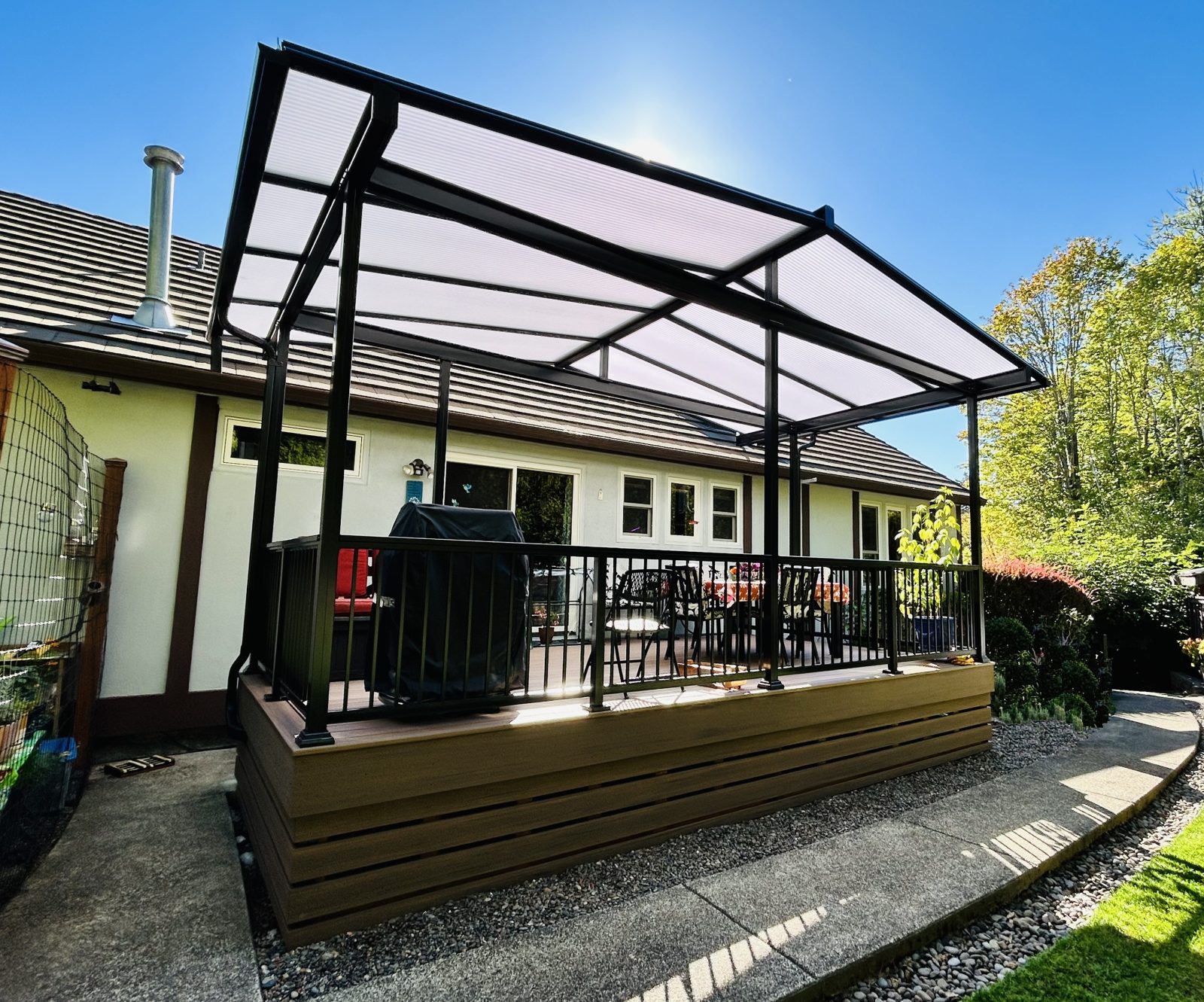
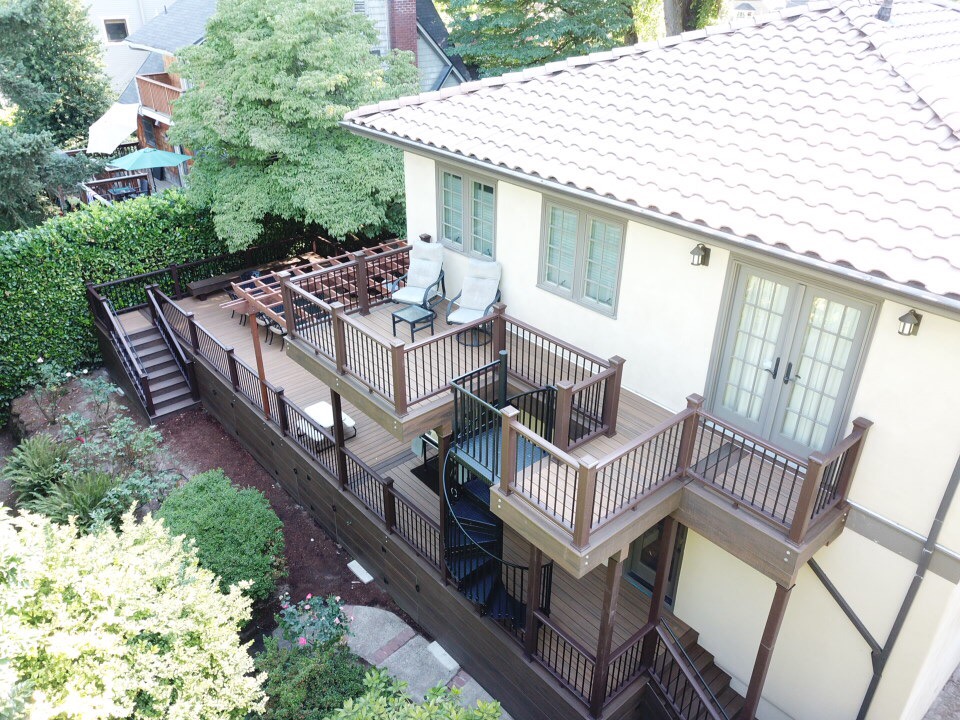
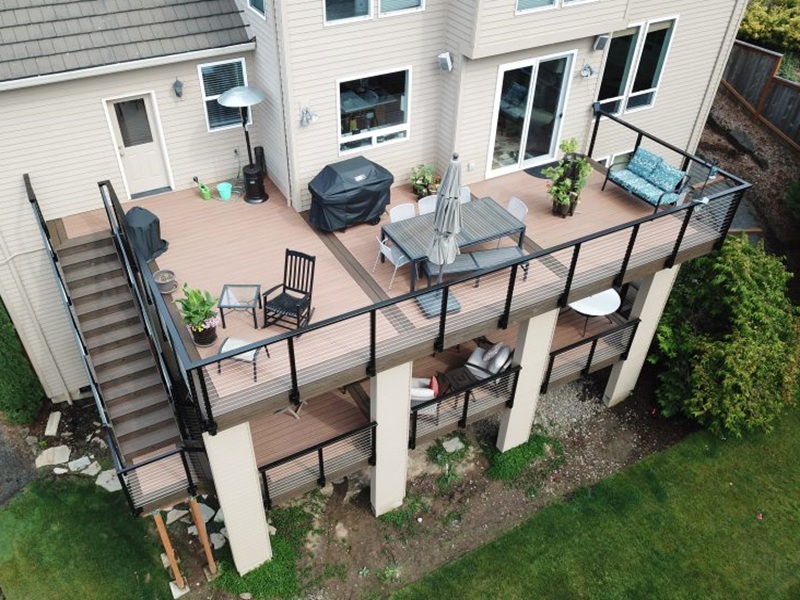
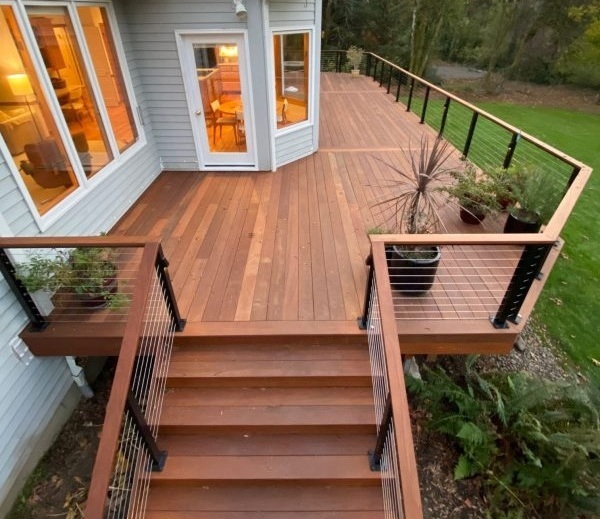
Happy Valley Deck Gallery
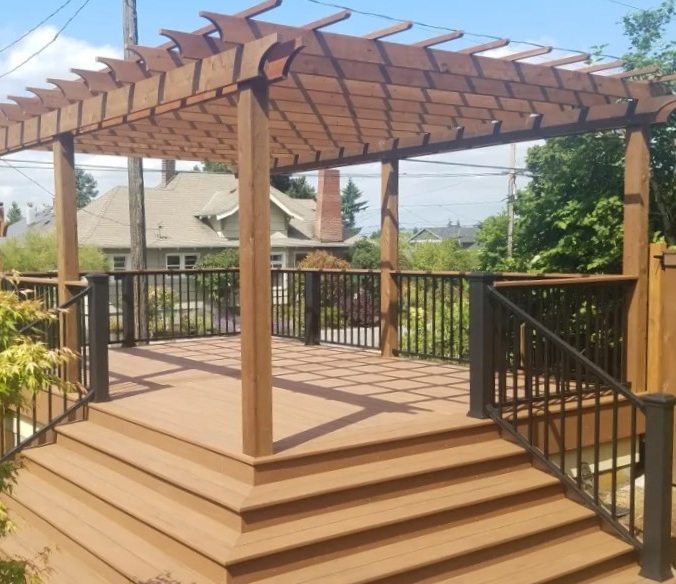
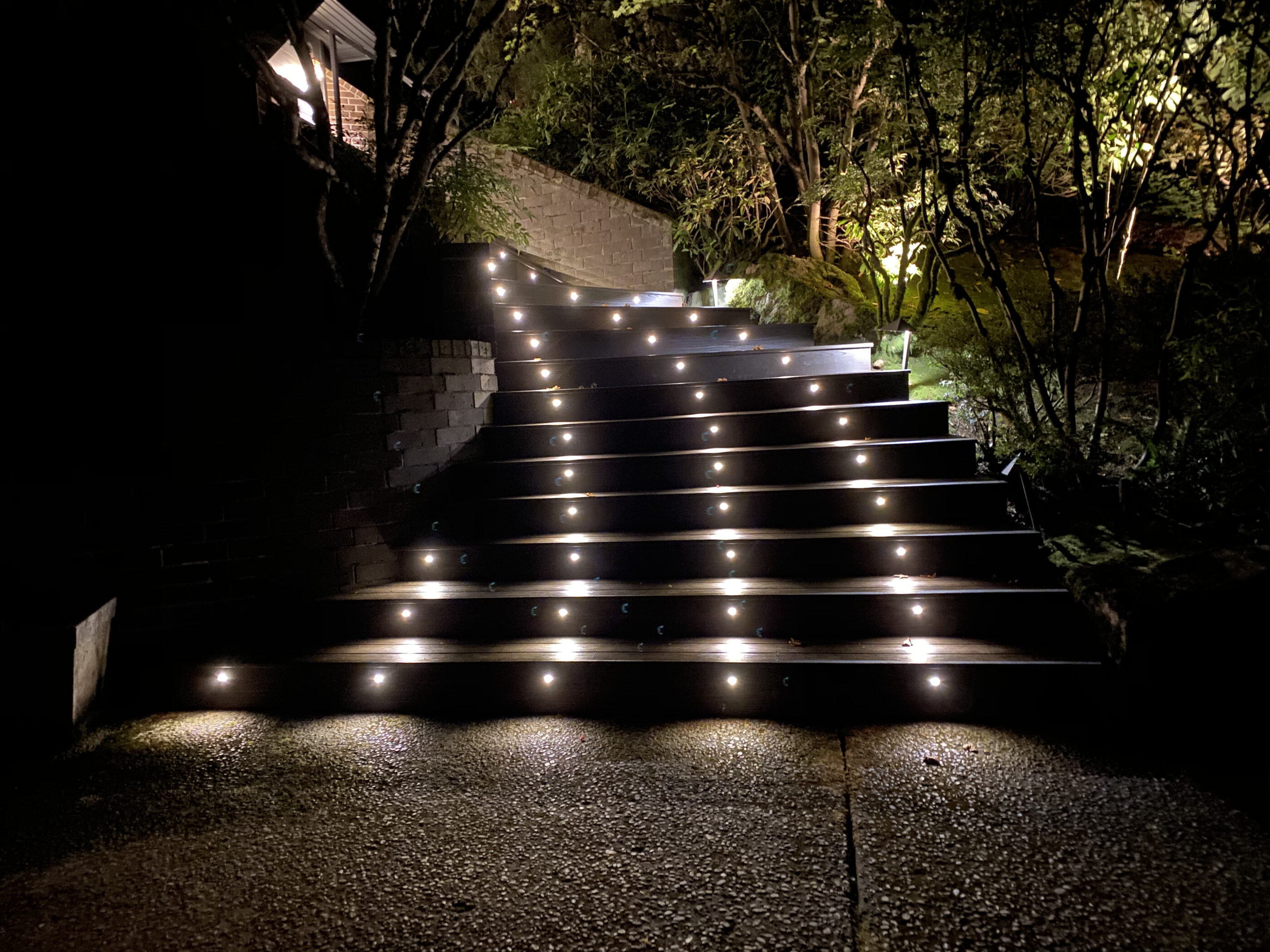
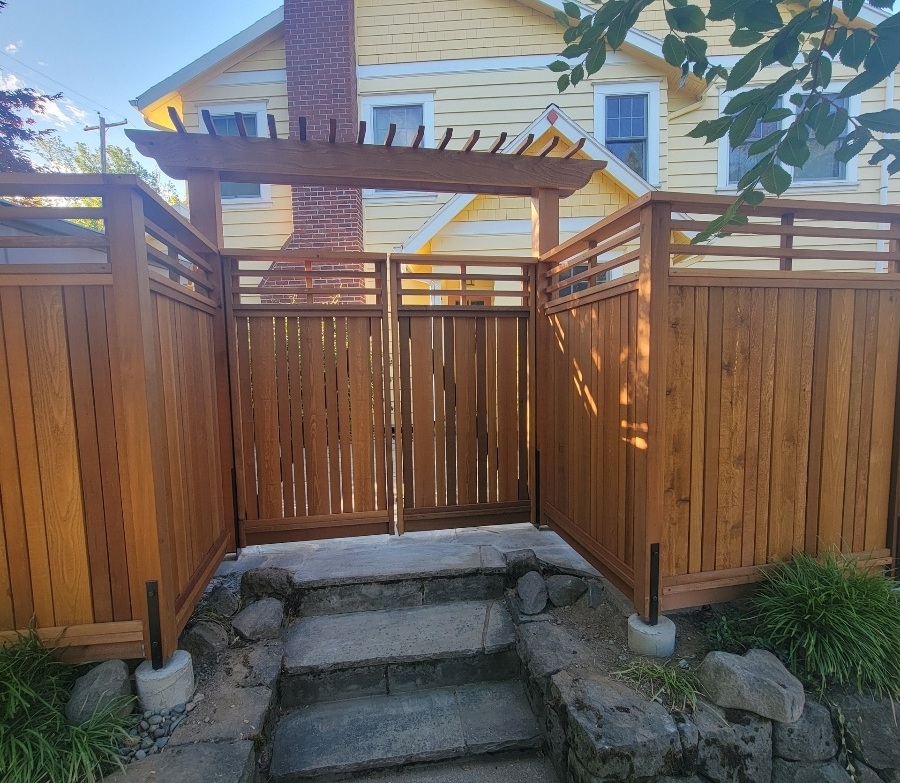
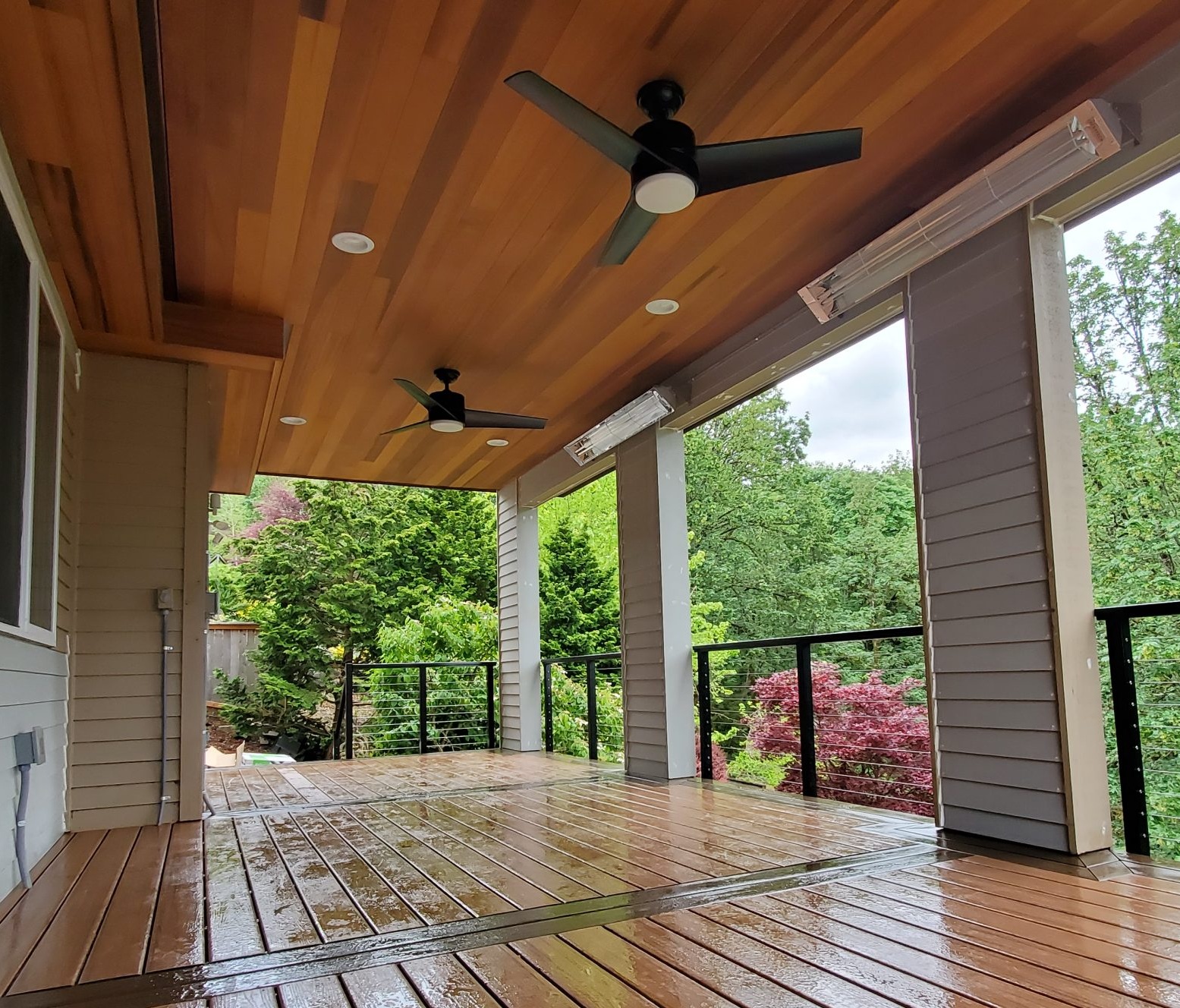
The Happy Valley Deck-Building Process
Consultation & Site Evaluation
We visit your property to measure, assess drainage, and discuss design goals.
Design & Material Selection
Our designers help you choose materials, railing styles, and finishes that suit your home.
3
Construction & Framing
Structural framing, footings, joists, and decking are installed using best-practice techniques.
Finishing Touches
Railings, lighting, stairs, and trim bring your deck to life.
Final Inspection & Walkthrough
We ensure every detail meets our standards — and yours.
Local Tip: Happy Valley’s rainy season demands proper waterproofing and flashing; every Deck Masters project includes moisture management design.
Happy Valley Decking Material FAQs
How does Trex decking perform in Happy Valley’s rain?
Trex decking — along with other high-quality composite decking brands — performs exceptionally well in Happy Valley’s rainy, moisture-heavy climate, which is very similar to Portland but often includes even more hillside runoff, shaded backyards, and morning dew that linger due to elevation. One of the biggest advantages for homeowners in Happy Valley is that Trex does not absorb water, meaning the boards won’t swell, cup, warp, crack, or rot the way cedar, pine, and pressure-treated boards often do after years of exposure to the Willamette Valley’s wet winters.
Because Trex decking is manufactured with a durable composite cap, it resists mildew, mold growth, algae, and moisture intrusion — all common issues for wood decks in Happy Valley’s rainy season from October through May. Even when the deck remains wet for long periods, Trex boards stay dimensionally stable, which is ideal for backyards with minimal sunlight or heavy tree coverage (common in Happy Valley neighborhoods like Scouters Mountain, Rock Creek Meadows, and Valley View Terrace).
Overall, Trex is one of the best-performing materials for wet-climate decks, making it a top choice for homeowners wanting a long-lasting, low-maintenance deck that holds up beautifully year-round in the Happy Valley / Portland metro climate.
Is Ipe or tropical hardwood really worth it for Happy Valley homes?
Yes — Ipe and other tropical hardwoods are absolutely worth the investment for homeowners in Happy Valley, Oregon, especially for those who want a premium deck that offers unmatched durability and a luxury appearance. Ipe is one of the hardest, densest wood species in the world, which makes it naturally resistant to rot, mold, mildew, insects, and long-term water exposure — all critical factors in a climate as wet as the greater Portland/Happy Valley region.
While the upfront cost of Ipe or similar hardwoods is higher than cedar or composite, the lifespan is dramatically longer. A properly installed and maintained Ipe deck in Happy Valley can last 40–50 years, even with our heavy rainfall, fog, and seasonal temperature shifts. Its natural density prevents water intrusion and reduces warping and cupping — two of the most common failures seen in cedar decks across the Willamette Valley.
For homeowners who love the rich, timeless look of real wood but want long-term performance, tropical hardwood is one of the most durable choices available. If you’re planning to upgrade your Happy Valley outdoor living space and want a deck that elevates curb appeal while offering decades of reliability, Ipe is an outstanding investment.
How often should I maintain a cedar deck in Happy Valley?
For a cedar deck in Happy Valley, you should expect to perform maintenance more frequently than the national average because of the area’s heavy rainfall, long wet seasons, and shaded backyard environments. Typically, cedar decks in the Happy Valley and Portland metro region require cleaning, sealing, or staining every 1–2 years to prevent premature fading, mildew growth, and moisture damage.
Cedar is a beautiful natural material, but it’s softer and more porous than tropical hardwoods or composites, meaning it absorbs moisture easily — especially in Happy Valley’s climate where decks often remain damp for long periods between October and April. Without regular maintenance, cedar can begin to gray, crack, warp, cup, or develop soft spots, particularly on decks positioned on north-facing slopes or under tree cover.
Consistent maintenance not only preserves the wood’s color and grain but also dramatically extends the lifespan of your cedar deck. If you’re a Happy Valley homeowner who prefers the look and feel of natural wood, budgeting for annual or biannual sealing is essential to keeping your cedar deck in top condition.
Can composite decking in Happy Valley get slippery in rain?
Composite decking, including brands like Trex, TimberTech, and Deckorators, is designed with slip-resistant surface textures, making it much safer in wet conditions than many traditional wood deck surfaces. For Happy Valley homeowners, where rainfall is frequent and decks often remain damp throughout the fall, winter, and early spring, composite decking is generally not considered slippery under normal use.
Because composites repel water rather than absorbing it, the boards don’t become slimy, swell, or develop the soft wood fibers that make aging cedar decks slick and hazardous. Modern composite boards feature deep grain patterns and micro-textured surfaces that increase traction — extremely helpful in Happy Valley neighborhoods with shaded lots or decks exposed to constant moisture.
That said, any surface can become slippery if algae or pollen accumulate, especially in damp climates. A quick yearly wash is typically enough to maintain traction and keep composite boards performing safely. Overall, composite decking provides one of the best low-slip, low-maintenance decking options for rain-heavy regions like Happy Valley, Oregon.
General Happy Valley Deck Building FAQs
How much does a new deck cost in Happy Valley?
The cost of building a new deck in Happy Valley, Oregon generally ranges from $40 to $85 per square foot, depending heavily on the materials you choose, the height of the deck, design complexity, railing type, and how easy or difficult your yard is to access. Homeowners in Happy Valley often have hillside lots, uneven terrain, or elevated rear yards, which can influence costs compared to flat Portland properties.
Lower-End Pricing (Happy Valley Context):
More affordable decks typically include rectangular or basic layouts constructed with pressure-treated lumber, cedar, or entry-level composite decking. These projects usually:
-
Sit 1–5 feet off the ground,
-
Include simpler aluminum picket railings,
-
Require minimal permitting (or none in unpermitted cases), and
-
Have straightforward framing conditions without major excavation or slope adjustments.
This is common for Happy Valley homes in newer developments where yards are relatively level and accessible.
Higher-End Pricing (Happy Valley Context):
Costs increase with more complex features, including:
-
Taller or multi-level decks common on Happy Valley hillside homes,
-
Projects using high-end composite or tropical hardwoods like Ipe,
-
The need for stairs, landings, or elevated supports,
-
Cable or glass railings to preserve views,
-
Permitted structural upgrades required by local building codes.
These features are especially popular in Happy Valley neighborhoods with scenic valley or Mt. Hood views where homeowners want to elevate the space into a true outdoor living experience.
Important Long-Term Note:
While cedar and pressure-treated wood decks appear cheaper initially, most Happy Valley homeowners find that the long-term cost of staining, sealing, repairing, and sanding softwood decks every 1–2 years often surpasses the cost of installing a low-maintenance composite deck that can last decades with minimal care.
For long-term value and durability in Happy Valley’s wet climate, composite decking frequently wins financially.
How long does it take to build a deck in Happy Valley?
For a typical home in Happy Valley or the greater Portland area, deck construction usually takes from 1 to 4 weeks, depending on the project size, complexity, weather, and permitting requirements.
-
Simple cedar or composite decks that are low to the ground and rectangular in shape may take 7–10 days from start to finish.
-
Larger or elevated decks, especially those built on Happy Valley’s sloped terrains, may take 2–3 weeks or longer due to structural engineering, stair systems, or multi-tier designs.
-
If the project includes pergolas, patio covers, drainage systems, hot tub framing, lighting, or cable railings, the timeline may extend to 3–4 weeks.
Happy Valley’s rainy climate can occasionally introduce weather delays, but experienced deck builders know how to schedule efficiently, work around storms, and keep the project running smoothly.
Do you work in the Winter or rainy months?
Yes — deck construction in Happy Valley absolutely continues throughout the winter and rainy months. Because the Portland/Happy Valley region receives consistent moisture for much of the year, deck builders are accustomed to working with weather-resistant materials and scheduling work around periodic storms.
Winter is often a great time for Happy Valley homeowners to start projects because:
-
Builders typically have shorter waitlists,
-
Material availability is high,
-
Composite decking and pressure-treated framing can still be installed safely in cool weather,
-
Permitting offices have faster turnaround times.
While heavy rain can temporarily pause work, most phases — demolition, framing, railing installation, lighting, drainage system setup — can be completed even during wetter months. This allows your new deck to be finished and ready for spring and summer use.
Can you resurface a deck instead of rebuilding?
Resurfacing a deck is often an excellent option for Happy Valley homeowners if the existing deck’s framing is structurally sound but the surface boards, railings, or stairs have aged or become worn out. Deck resurfacing typically involves keeping the original framing, then installing new composite decking, updated railings, fascia, and stairs.
Resurfacing is possible when:
-
The wood framing passes inspection (no rot, warping, or structural issues),
-
The support posts and beams meet current codes,
-
You want to upgrade from wood to low-maintenance composite decking,
-
You prefer a cost-effective alternative to a full rebuild.
Because Happy Valley receives heavy rainfall and moisture exposure, resurfacing with composite decking is especially popular — it eliminates the need for staining or sealing and significantly reduces long-term maintenance.
If your deck’s frame is too old or damaged, a full rebuild may be required, but resurfacing remains a cost-saving and fast solution for many homes.
What railing options are popular in Portland?
In Happy Valley and the broader Portland metro area, homeowners often choose railings that blend durability, style, and low maintenance — especially for decks exposed to rain and hillside views.
The most popular options include:
Cable Railings
Extremely popular in Happy Valley, especially on homes with elevated decks overlooking valleys or greenspaces. Cable railings offer a modern aesthetic and excellent visibility.
Aluminum Railings
Low-maintenance, budget-friendly, and available in a variety of colors. A top choice for composite and cedar decks alike. They don’t rust, sag, or warp — ideal for Oregon’s wet climate.
Glass Railings
Perfect for homeowners wanting an unobstructed view. Glass railings are elegant and weather-resistant, though they require periodic cleaning due to rain and pollen.
Composite Railings
Often paired with matching composite decking systems. Durable and long-lasting with minimal upkeep required.
Wood Railings
Still used for classic cedar decks, though they require frequent maintenance and are less popular than low-maintenance alternatives.
These railing systems allow Happy Valley homeowners to combine safety, aesthetics, and climate-resilience while complementing the overall deck design.
Do you offer deck lighting and drainage systems?
Yes — for Happy Valley homeowners looking to transform their backyard into a year-round outdoor living space, we offer a full range of deck lighting and under-deck drainage systems tailored for the Portland/Happy Valley climate.
Deck Lighting Options Include:
-
Post cap lights for evening ambience
-
Stair lights to improve nighttime safety
-
Under-rail LED lighting for a modern glow
-
Recessed floor lights ideal for entertainment spaces
Lighting not only enhances aesthetics but also extends the usability of your deck during Happy Valley’s long winter evenings.
Under-Deck Drainage Systems:
Especially valuable for elevated decks common in Happy Valley’s hillside neighborhoods. These systems:
-
Channel water away from the framing,
-
Create a dry space underneath for storage or patios,
-
Protect the structure from long-term moisture exposure,
-
Allow homeowners to build outdoor living areas under the deck without rain interference.
In a rainy region like the Happy Valley and Portland metro area, drainage systems dramatically extend the lifespan of your deck and increase your home’s usable outdoor space.
What Portland Homeowners Say About Us
Ready to start your Portland deck project?
Whether you’re in SW Portland, NW Portland, on the East side, Lake Oswego, or Beaverton, Deck Masters is your trusted partner for custom decks and fences that last.